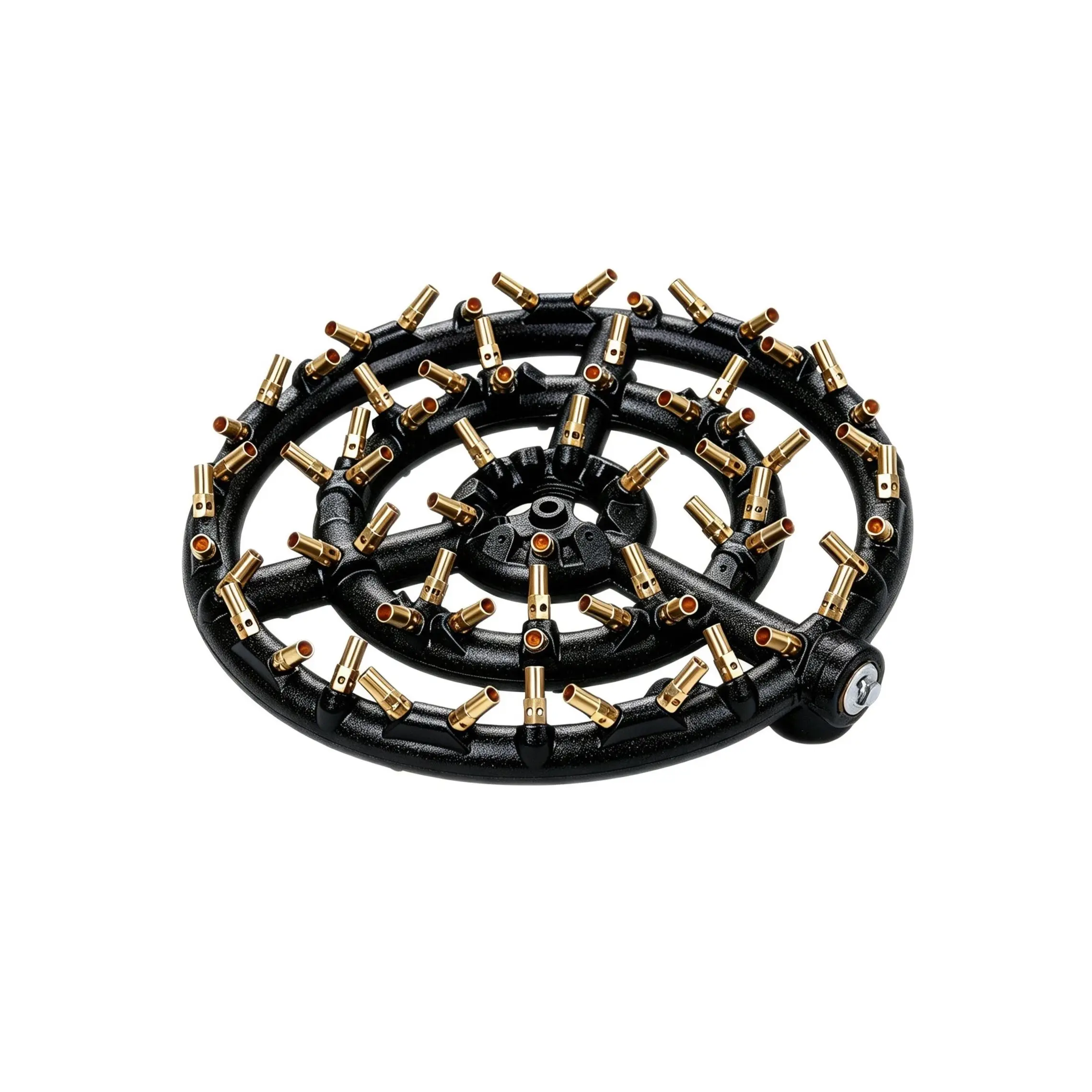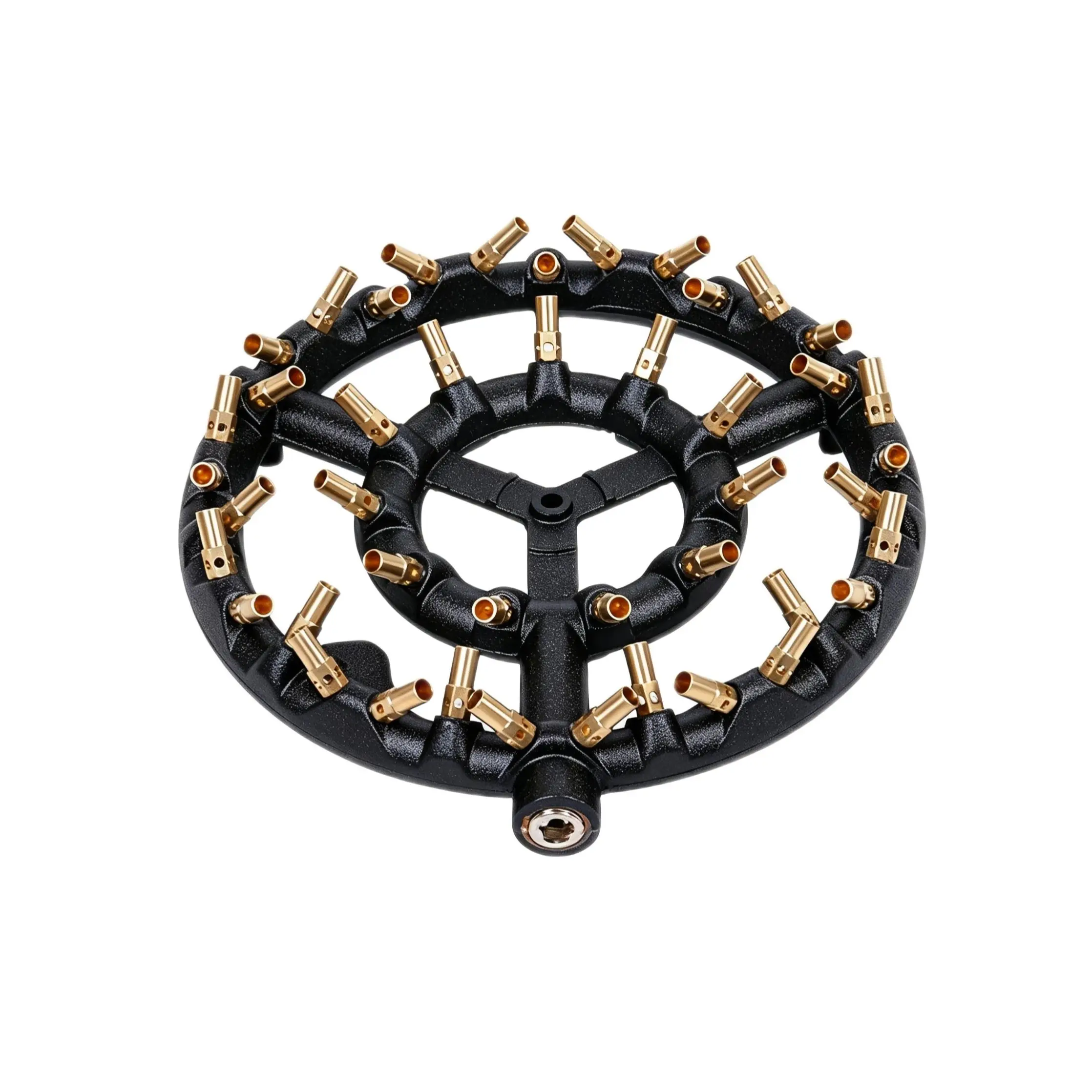
Sabaf Burner and CE Certification: Design Requirements for EU Gas Cooktops
In the European Union, gas cooktops must comply with strict safety, performance, and environmental regulations before entering the market.
Among the most widely used burner systems, Sabaf burners are well known for meeting EU standards. However, CE certification is not tied to a brand—it depends on whether the burner design and the complete appliance system satisfy EU regulatory requirements.
This article explains how Sabaf burner design aligns with CE certification requirements and what EU gas cooktop manufacturers must consider during product development.

Sabaf Burner and CE Certification
What Is CE Certification for Gas Cooktops?
CE certification confirms that a gas cooktop complies with applicable EU legislation, primarily:
Gas Appliances Regulation (EU) 2016/426 (GAR)
EN 30 series – European standards for domestic gas cooking appliances
Low Voltage Directive (LVD) (for ignition systems)
EMC Directive (for electronic components)
CE marking is mandatory for selling gas cooktops in all EU member states.
Role of Sabaf Burners in CE-Compliant Gas Cooktops
Sabaf burners are often selected because their designs are:
Proven in EN 30 testing environments
Optimized for stable flame and controlled combustion
Compatible with both natural gas (G20/G25) and LPG (G30/G31)
Engineered with tight dimensional tolerances
However, CE certification applies to the full appliance, not the burner alone. The burner must function safely within the complete cooktop system.
Key Design Requirements for CE Certification
1. Flame Stability and Combustion Safety
According to EN 30 requirements, burners must ensure:
Stable flame under normal and abnormal conditions
No flame lift, flashback, or flame extinction
Clean combustion without excessive CO emissions
Sabaf burner designs typically feature:
Optimized flame port geometry
Balanced primary air intake
Uniform gas distribution across burner rings
These features directly support CE compliance.
2. Flame Failure Safety Device (FFD) Compatibility
EU regulations require gas cooktops to incorporate flame supervision systems such as thermocouples.
Burner design must allow:
Correct thermocouple positioning
Rapid flame detection
Gas shut-off within specified time limits
Sabaf burners are designed to integrate seamlessly with standard EU-approved FFD systems.
3. Gas Type Conversion and Marking
CE-compliant cooktops must support:
Factory-set gas type
Conversion between LPG and natural gas
Clear injector identification and documentation
Sabaf burners and compatible OEM alternatives usually offer:
Multiple injector sizes
Clear gas category compatibility (II2H3B/P, etc.)
Stable performance after gas conversion
4. Thermal Resistance and Material Safety
Burner materials must withstand:
Continuous high temperatures
Thermal shock
Corrosion from combustion byproducts
Common CE-compliant materials include:
Cast iron for burner heads
Aluminum alloy bases (ADC12)
Stainless steel flame spreaders
Material consistency is essential for passing endurance and safety tests.
5. Energy Efficiency and Heat Distribution
EN 30 testing also evaluates:
Heat input accuracy
Cooking efficiency
Uniform heat distribution
Sabaf burner geometry is designed to maximize heat transfer while minimizing gas waste—supporting EU energy performance expectations.
CE Certification Is a System-Level Process
A critical misconception among manufacturers is assuming that using a branded Sabaf burner guarantees CE approval.
In reality, CE certification depends on:
Burner + gas valve + injector + pan support integration
Assembly accuracy
Installation environment
Quality control during production
Even the best burner design can fail CE tests if system integration is poor.
OEM Sabaf-Compatible Burners and CE Compliance
Many EU and non-EU manufacturers successfully use Sabaf-compatible OEM burners that:
Follow Sabaf structural principles
Use CE-approved materials
Pass EN 30 testing when integrated correctly
For cost-sensitive or private-label brands, this approach allows:
Lower production cost
Flexible design customization
Faster supply chain response
Best Practices for CE-Oriented Burner Selection
To ensure smooth CE certification, manufacturers should:
Work with burner suppliers experienced in EU standards
Request EN 30 test data or reference projects
Perform pre-compliance testing
Validate gas category compatibility early in design
Document burner specifications clearly in the technical file
Conclusion
Sabaf burners are widely respected in the EU gas cooktop industry, but CE certification depends on engineering discipline, not brand selection.
Understanding the design requirements behind CE compliance—from flame stability to material safety—allows manufacturers to develop compliant, cost-effective gas cooktops for the European market.
Whether using original Sabaf burners or high-quality OEM-compatible alternatives, success in the EU starts with correct burner design and system integration.