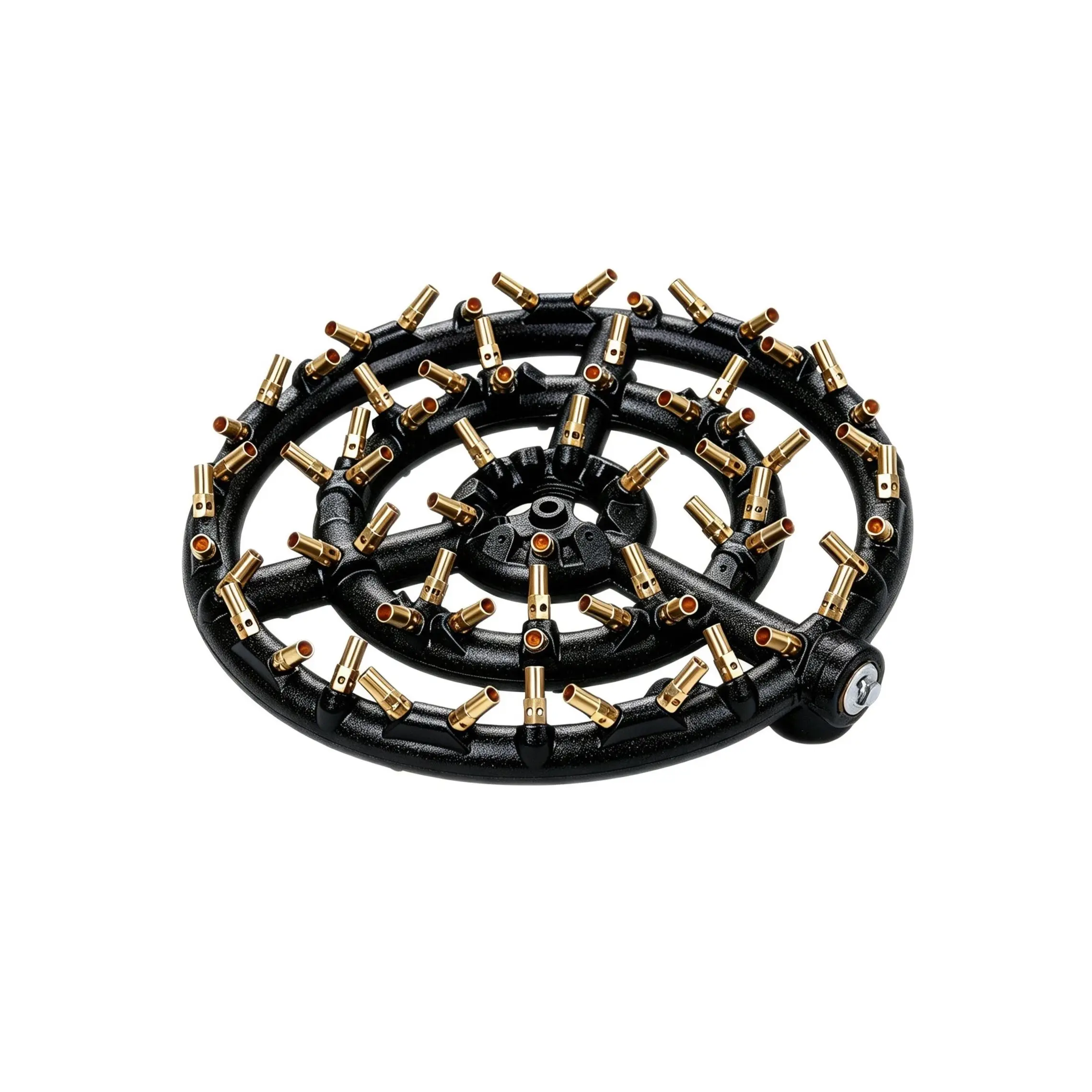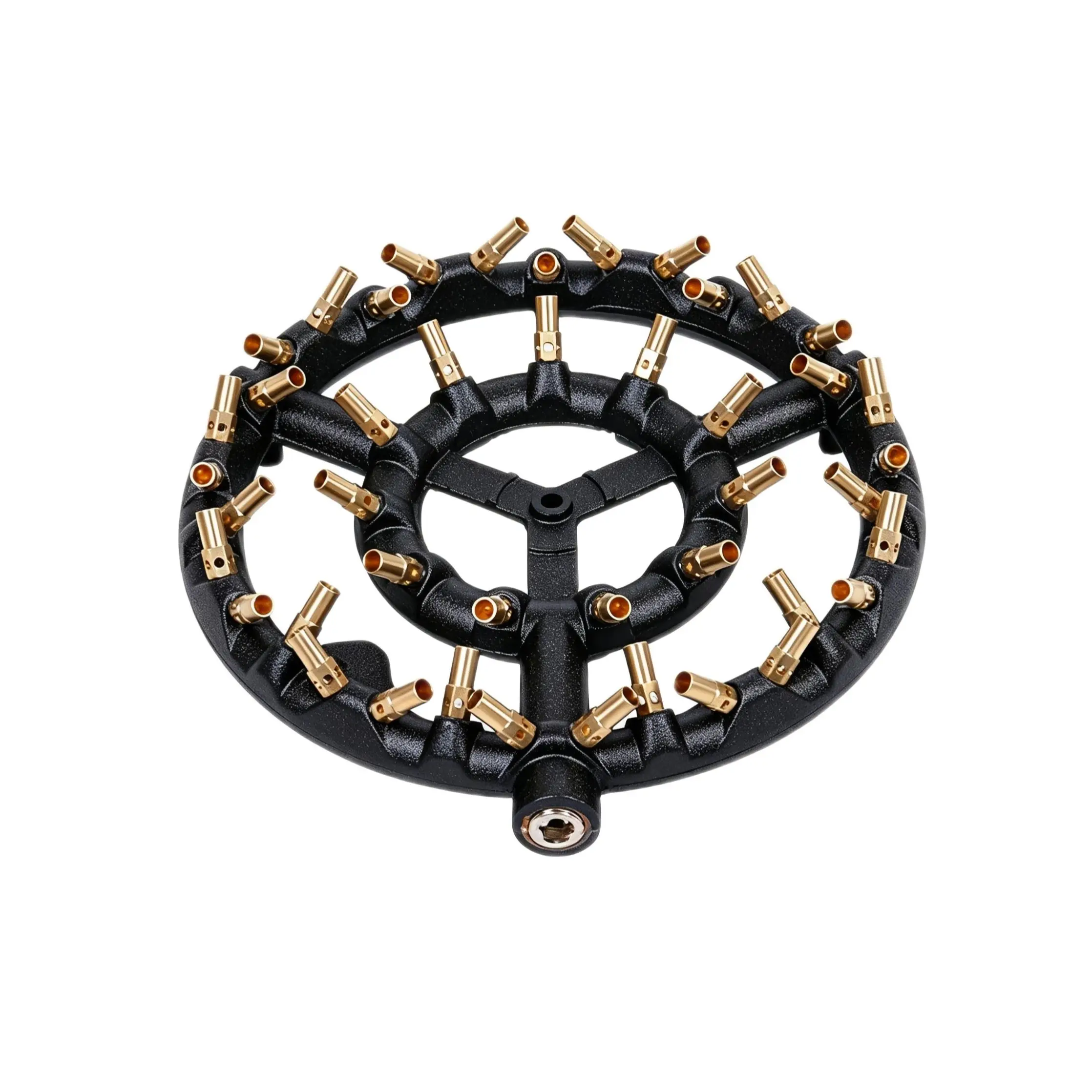
Gas Stove Burner Cap Manufacturing Process: Materials, Tolerances, and Quality Control
Gas stove burner caps play a critical role in flame distribution, heat efficiency, and overall safety of gas cooktops. For stove manufacturers and OEM buyers, understanding the manufacturing process of gas stove burner caps—from material selection to tolerance control and quality inspection—is essential for ensuring consistent performance and long-term reliability.
This article provides a complete overview of how gas stove burner caps are manufactured and what factors truly matter in large-scale production.


1. Common Materials Used for Gas Stove Burner Caps
Material selection directly affects heat resistance, durability, and cost. The most commonly used materials include:
Cast Iron Burner Caps
Cast iron is widely used for both household and commercial gas stove burner caps due to:
Excellent heat resistance and thermal stability
Uniform heat distribution
Long service life under high-temperature conditions
Grades such as GG20 / HT200 gray cast iron are common in OEM production, especially for European and Middle Eastern markets.
Aluminum Alloy Burner Caps
Aluminum alloy burner caps are typically used for lightweight designs:
Faster heat response
Lower material cost
Suitable for medium-duty cooktops
High-temperature aluminum alloys and surface treatments are required to ensure oxidation resistance.
2. Gas Stove Burner Cap Manufacturing Process
Step 1: Casting or Die Casting
Cast iron burner caps are produced using sand casting or shell molding.
Aluminum burner caps are usually made by high-pressure die casting.
Proper gating design and molten metal control are essential to prevent porosity and shrinkage defects.
Step 2: CNC Machining and Finishing
After casting, critical surfaces undergo CNC machining to ensure:
Flat contact surfaces
Accurate burner height
Stable flame ring alignment
This step is crucial for meeting dimensional tolerances.
Step 3: Drilling and Flame Port Processing
Flame ports are drilled or punched with high precision:
Hole diameter consistency directly affects flame stability
Uniform spacing ensures even combustion
Automated drilling is preferred over manual processes for OEM consistency.
Step 4: Surface Treatment
Depending on application and market requirements, surface treatments may include:
Sandblasting for surface uniformity
Heat-resistant coating
Enamel or special anti-corrosion finishes
These treatments improve durability and appearance while protecting the burner cap under repeated heating cycles.
3. Manufacturing Tolerances That Matter
Precision tolerances are essential for safe and efficient burner performance. Key tolerance points include:
Flame port diameter tolerance (usually ±0.05 mm)
Burner cap flatness
Central alignment with burner body
Poor tolerance control can lead to uneven flames, noise, or incomplete combustion.
4. Quality Control Standards for Burner Cap Production
Reliable gas stove burner cap manufacturers implement multi-stage quality control:
Incoming Material Inspection
Chemical composition verification
Mechanical property testing
In-Process Inspection
Dimensional checks after machining
Flame port inspection using gauges
Final Performance Testing
Flame stability testing
Thermal shock resistance
Visual inspection for coating defects
Many OEM buyers require compliance with CE, EN, or ISO quality standards, especially for export markets.
5. Why Manufacturing Process Matters for OEM Buyers
For stove manufacturers, a well-controlled burner cap manufacturing process ensures:
Stable flame performance
Lower after-sales risk
Consistent batch quality
Cost-effective long-term sourcing
Choosing a supplier with integrated casting, machining, and quality control capabilities is key to achieving competitive pricing without sacrificing safety or performance.
Conclusion
The manufacturing process of gas stove burner caps is far more than simple casting. From material selection and precision tolerances to strict quality control, each step determines the final performance of the gas cooktop.
For OEM stove manufacturers, understanding these processes helps in selecting reliable suppliers and building long-term, cost-effective partnerships.