The Hidden Costs of Cheap Burner Heads: Why Smart OEMs Invest in Quality
The Temptation and the Trap
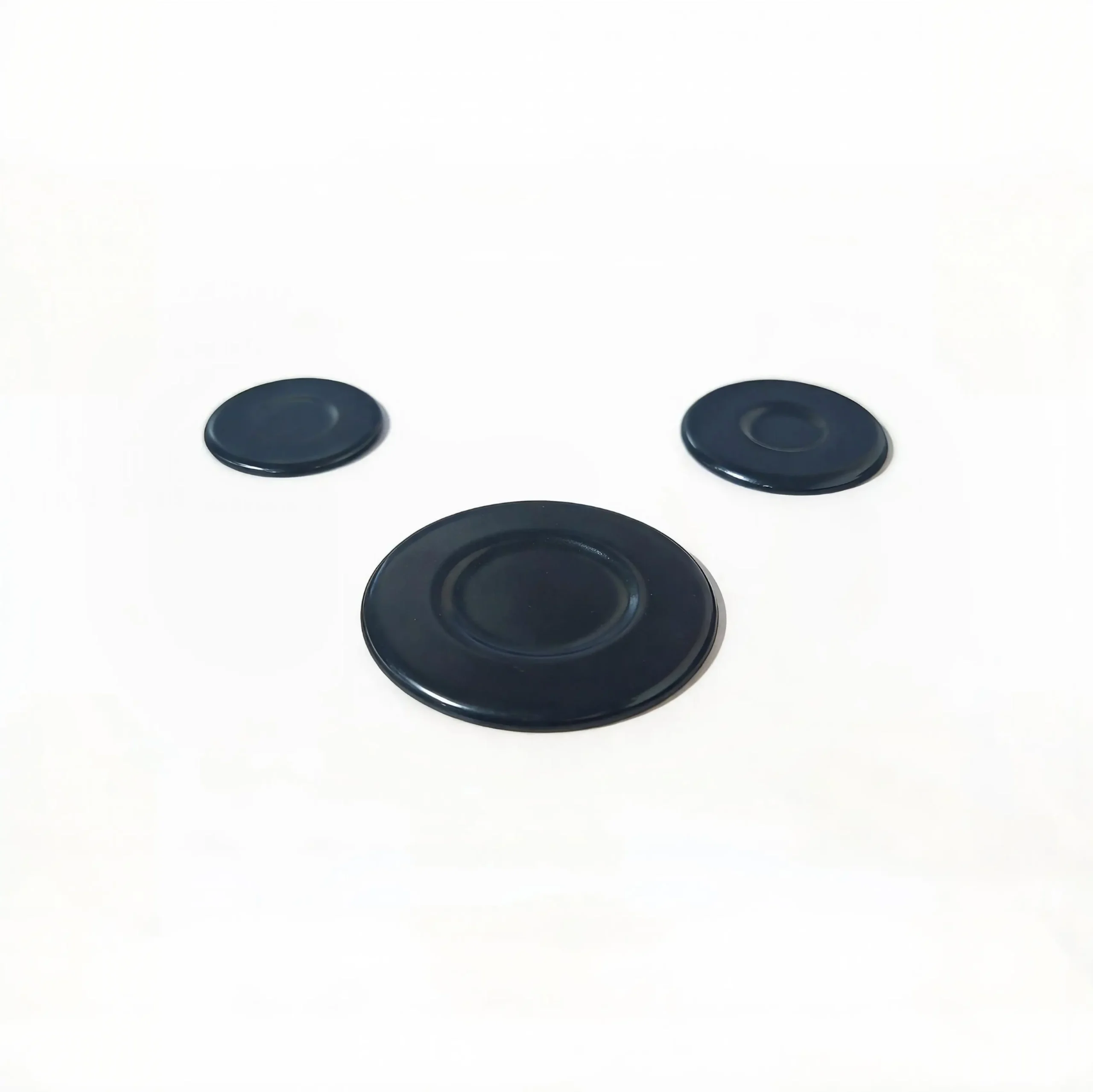
In the fiercely competitive gas cooker market, OEMs face relentless pressure to reduce Bill of Materials (BOM) costs. The gas burner head, a high-volume component, becomes a prime target for cost-cutting. Sourcing a seemingly identical “budget” alternative to a premium burner cap can show an immediate, attractive saving on a spreadsheet. However, this decision initiates a chain reaction of hidden, consequential costs that erode profitability, damage brand equity, and ultimately threaten long-term viability. For the smart OEM, investing in quality—exemplified by components like the precision-engineered Vulcan burner cap—is not an expense, but the most strategic form of cost-saving and brand protection available.

1. The Immediate Aftermath: Production Line Carnage
The first and most visible costs of inferior components appear where it hurts most: manufacturing efficiency and yield.
Dimensional Variance and Line Downtime: Cheap gas burners suffer from poor process control. A batch of burner caps may have inconsistent port sizing or warped bases, preventing a uniform, flush seat on the burner body. This forces assembly line workers to manually inspect, adjust, or reject units. The result is slowed production speed, increased labor costs per unit, and disruptive line stoppages to troubleshoot and swap out faulty batches. The cost of one hour of unplanned downtime can obliterate the savings from an entire container of cheap parts.
Increased Scrap and Rework: Substandard materials and casting lead to visible defects—porosity, incomplete molding, or poor surface finish. These parts are often discovered during final inspection or, worse, during functional testing, leading to direct scrap loss. Others may require costly rework, such as hand-deburring sharp port edges that should have been precision-finished at the supplier.
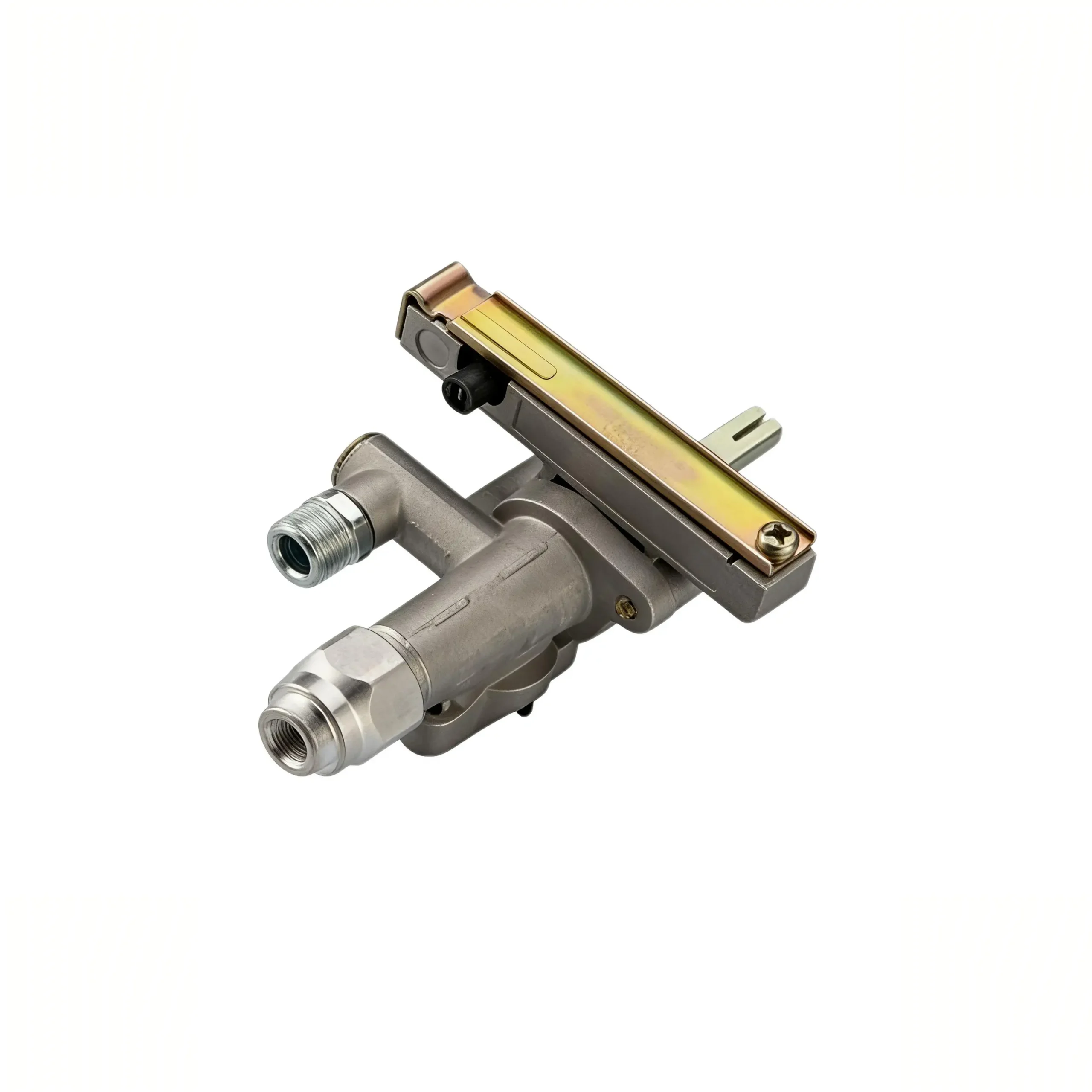
Compromised Performance from Day One: Even units that pass initial assembly may be compromised. A poorly machined injector orifice or an imprecise venturi tube in a cheap burner directly leads to inconsistent primary air entrainment. This manifests as slight flame instability or variations in heat output between burners on the same gas cooker, creating a product that is inherently inferior before it even leaves the factory.
2. The Warranty Time Bomb: Field Failures and Brand Erosion
Once in the consumer’s home, the true cost of cheapness explodes in the form of warranty claims and irreversible brand damage.
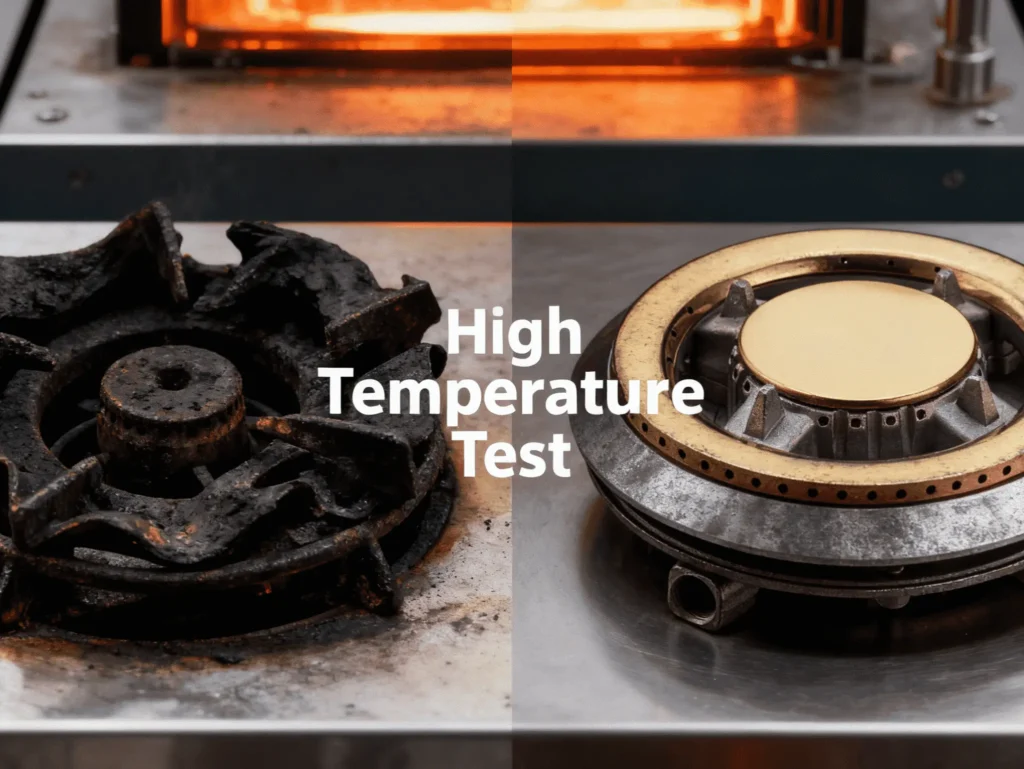
Predictable Failure Modes: Low-grade aluminum alloys cannot withstand repeated thermal cycling. A cheap burner cap will warp over time, causing an uneven flame, popping noises, and ultimately improper combustion. Inferior enamel coatings on cast iron chips, leading to rapid rust. These are not “random” failures; they are guaranteed outcomes of material science neglect.
The Exponential Cost of a Single Field Visit: The calculus is devastating. The $0.50 saved on a burner cap is consumed instantly when a single warranty call is triggered. The cost includes: the service truck roll, the technician’s hourly wage, the replacement part (now a higher-quality one), the administrative processing, and the customer appeasement. A single field repair can cost 50 to 100 times the initial “savings.”
The Silent Killer: Online Reputation: In the digital age, product reviews are destiny. A pattern of one-star reviews stating “burner warped after 6 months,” “flame is always yellow,” or “rusting under the caps” algorithms your product to the bottom of search results. This toxic digital footprint scares off potential customers far more effectively than any advertisement can attract them. The marketing department’s multi-million-dollar budget is nullified by a $2 component failure.
3. The Lost Opportunity: Stifled Innovation and Market Positioning
Choosing a low-cost, commoditized supplier locks an OEM into a race to the bottom, foreclosing paths to higher margins and market leadership.
Inability to Command a Premium: A gas cooker built with subpar gas burners cannot be positioned as a premium, high-performance, or durable appliance. The core cooking experience—the flame itself—is mediocre. This forces competition solely on price, battling against other low-cost entrants in a brutally shrinking margin pool.
No Access to Innovation: Premium suppliers of gas stove accessories and components invest in R&D. They develop new flame geometries for better wok hei, integrate simmering technology, or pioneer easy-clean surfaces. A supplier of cheap clone parts offers no such roadmap. The OEM is left with stagnant technology while competitors who partner with innovators (like those producing advanced Vulcan burner cap designs) launch features that capture consumer interest and justify higher price points.
Compliance Risk and Future-Proofing: As global efficiency (e.g., EU Ecodesign) and emissions standards tighten, certified, high-performance burners are essential. A cheap burner head, operating at the bare minimum of today’s standards, will likely fail tomorrow’s. The OEM then faces a frantic, expensive, and time-consuming requalification project, potentially losing access to key markets.
4. The Quality Investment: How Premium Components Like the Vulcan Burner Cap Pay Dividends
Contrast this with the ROI of investing in quality from a technically proficient supplier. A component like the Vulcan burner cap is a case study in value creation:
Zero-Defect Manufacturing: Precision casting and machining ensure every cap is dimensionally identical. This enables fully automated, high-speed assembly with no line adjustments, maximizing throughput and minimizing labor cost.
Engineered Longevity: Made from a specified, heat-resistant alloy with a controlled microstructure, it resists warping and corrosion for the life of the appliance. This directly prevents the most common field failure, slashing warranty claims to a fraction.
Guaranteed Performance: Its precision ports and optimized design deliver a stable, quiet, and efficient blue flame right out of the box and for years to come. This supports marketing claims of superior cooking performance and energy efficiency.
The slightly higher unit price is not a cost; it is an insurance premium against production delays, a performance enhancer for the end product, and a brand equity protector.
Conclusion: The True Cost Accounting
Smart OEMs perform a different calculation. They look beyond the unit price to the Total Cost of Ownership (TCO):
TCO of a Cheap Burner Head =
Unit Price + Line Rework Cost + Scrap Cost + Warranty Claim Cost + Brand Damage Cost + Lost Sales Opportunity Cost.
TCO of a Quality Burner Head (e.g., with Vulcan Cap) =
Higher Unit Price + Near-Zero Rework/Scrap + Minimal Warranty Cost + Enhanced Brand Value + Premium Pricing Power.
The equation consistently proves that the initial savings from cheap gas burners are a mirage. The hidden costs they introduce are systemic, pervasive, and devastating. Investing in quality components is a direct investment in operational smoothness, product excellence, customer satisfaction, and long-term brand strength. In the battle for the kitchen, the OEMs who understand that the true cost of a component is measured over the entire product lifecycle—not just at the moment of purchase—are the ones who build enduring, profitable brands. Quality doesn’t cost; it pays.