Beyond the Blue Flame: The Rigorous Testing Protocols That Define a Superior Burner Head
A blue flame is just the beginning. We unveil the 8 critical laboratory tests every premium burner head must pass, from salt spray chambers to 100,000-cycle endurance runs.
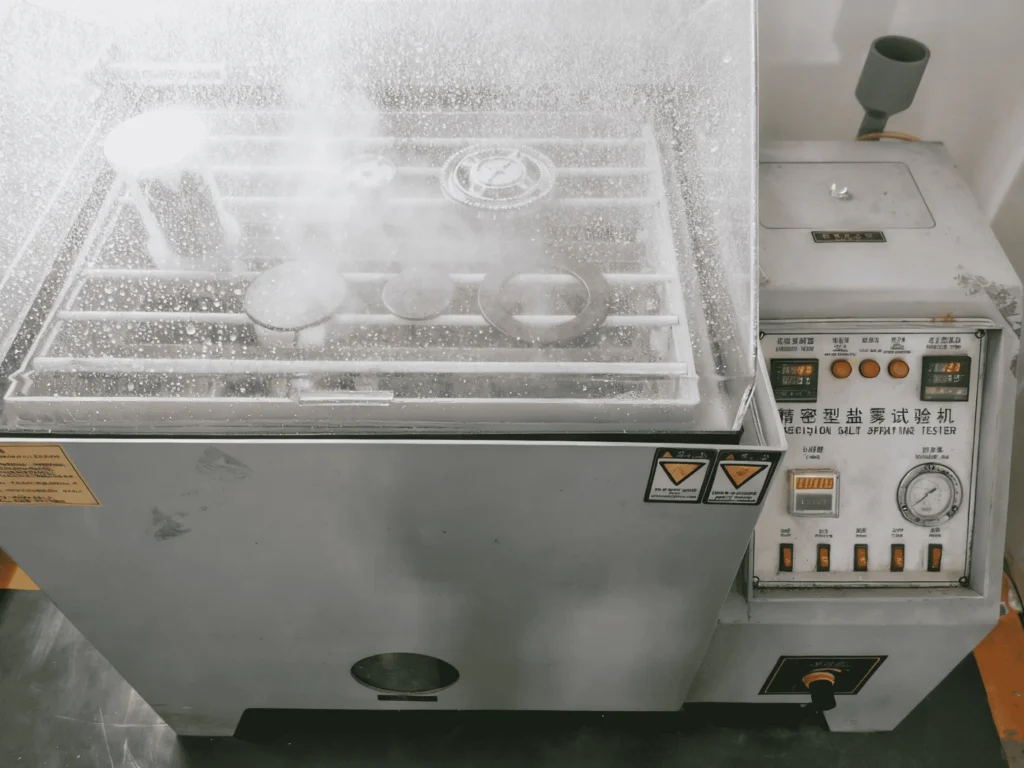
Introduction: Challenge the reader’s assumption that a visually okay flame is sufficient, introducing the concept of “engineered reliability.”
The Test Chamber Deep Dive:
- Salt Spray (Fog) Testing (ASTM B117): Detail the process of exposing components to a corrosive mist for 96+ hours to simulate years of kitchen exposure, and what a “pass” truly means.
- Thermal Cycling & Shock Tests: Describe subjecting burners to rapid, extreme temperature changes to ensure they won’t warp or crack.
- Pressure Stress Testing: Explain going beyond standard leak checks to test structural integrity under abnormally high gas pressures.
- Flow Rate & Consistency Verification: Discuss calibrating each burner to ensure identical gas flow and performance across every unit in a production run.
Performance & Efficiency Validation:
- Calorimeter Testing: Explain how heat output (BTU/kW) is precisely measured to guarantee advertised performance.
- Efficiency Analysis: Detail the process of calculating thermal efficiency in a controlled lab environment, capturing wasted heat.
- Emission Spectroscopy: Briefly touch on measuring CO and NOx emissions to ensure compliance with strict environmental standards.
Longevity Simulation:
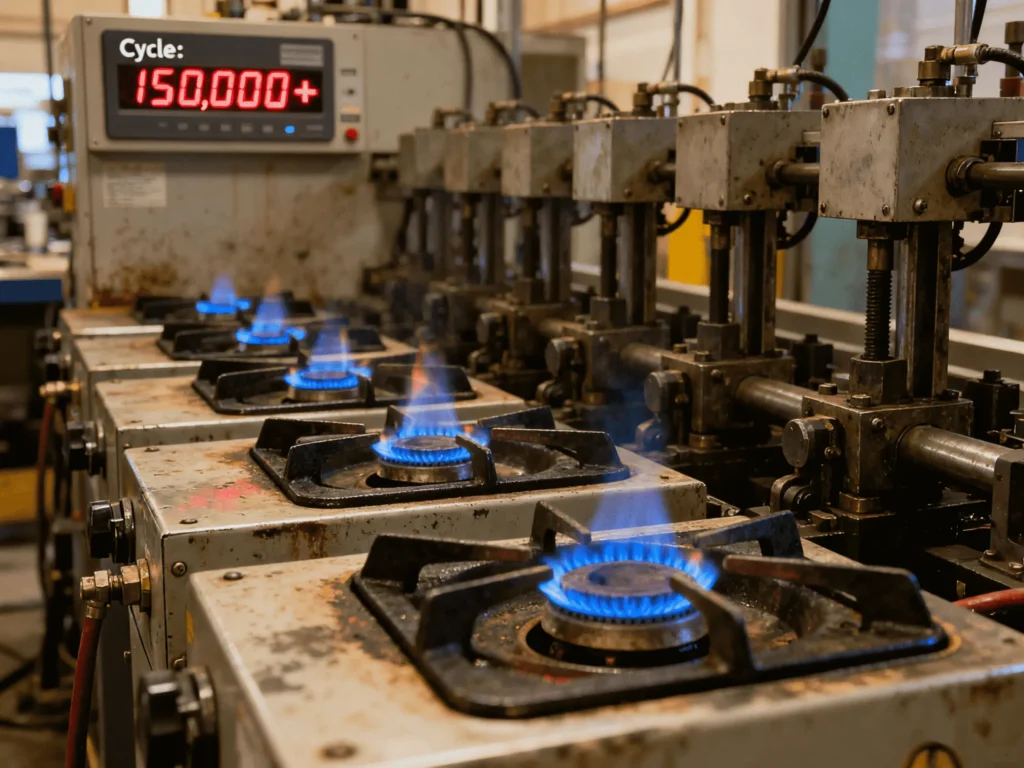
- Automated Ignition Endurance Test: Describe the machines that simulate a decade of use in a few weeks, clicking the igniter and cycling the flame hundreds of thousands of times.
Conclusion: Emphasize that this unseen testing process is what separates a commodity component from a professional-grade one.
CTA: “Don’t leave quality to chance. Ask us for the Test Report for any of our burner models and see the data for yourself.”