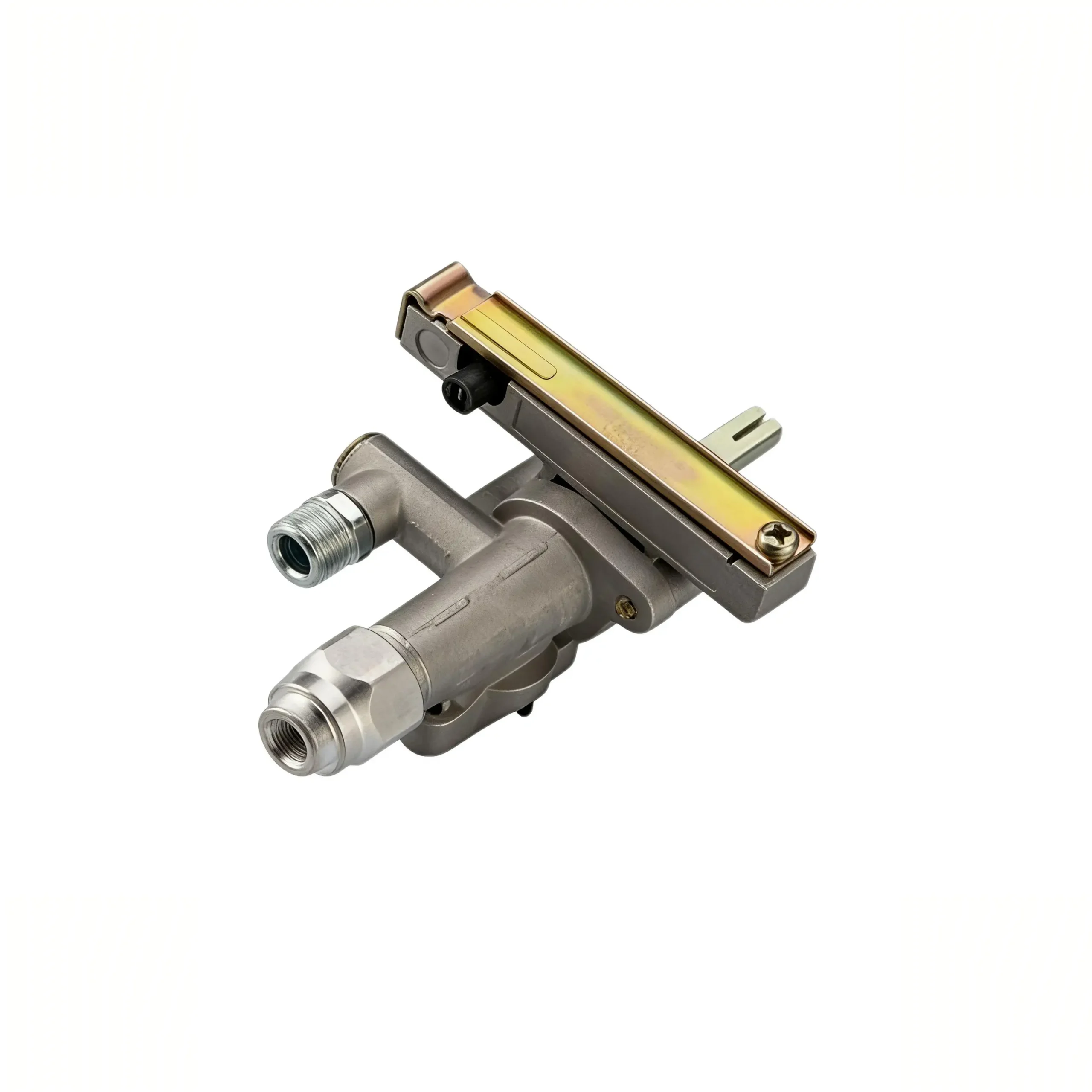
How Gas Stove Burner Base Design Affects Flame Stability and Heat Distribution
In gas cooktop systems, flame performance depends on more than just the burner head. The gas stove burner base plays a critical role in controlling gas flow, supporting structural alignment, and ensuring even heat distribution. For OEM gas stove manufacturers, burner base design directly impacts combustion efficiency, safety, and long-term reliability.
This article explains how burner base design influences flame stability and heat distribution in gas stoves.


1. Role of the Gas Stove Burner Base in Combustion
The gas stove burner base serves as:
The structural support for the burner head and cap
The primary gas distribution channel
The interface between gas inlet, injector, and burner ports
Any design weakness in the burner base can disrupt gas flow balance, leading to unstable flames or uneven heating.
2. Gas Flow Channel Design and Flame Stability
Uniform Gas Distribution
A well-designed burner base ensures that gas flows evenly from the injector to all flame ports. Key design factors include:
Symmetrical internal gas channels
Optimized chamber volume
Smooth internal surfaces
Uneven gas distribution can cause:
Flame lifting or flashing
Localized flame extinction
Inconsistent flame height across the burner
Injector Alignment
Precise alignment between the gas injector and burner base inlet is essential. Misalignment can lead to:
Turbulent gas flow
Delayed ignition
Increased noise during operation
CNC-machined burner bases improve alignment accuracy and overall flame stability.
3. Burner Base Geometry and Heat Distribution
Structural Symmetry
The geometric symmetry of the burner base affects how heat spreads across cookware. Balanced structures help:
Maintain uniform flame spacing
Prevent hot spots
Improve cooking efficiency
Height and Support Design
Burner base height determines the distance between flame and cookware. Improper height can result in:
Heat concentration at the center
Reduced thermal efficiency
Incomplete combustion
An optimized burner base design ensures even heat transfer across the cooking surface.
4. Material Selection and Thermal Performance
Cast Iron Burner Bases
Cast iron burner bases offer:
High thermal stability
Strong resistance to deformation
Consistent performance under prolonged high temperatures
They help maintain stable flame characteristics in commercial and heavy-duty gas stoves.
Aluminum Alloy Burner Bases
Aluminum alloy burner bases are:
Lightweight and cost-effective
Suitable for household gas cooktops
Proper alloy selection and surface treatment are required to prevent thermal distortion and ensure stable combustion.
5. Machining Precision and Assembly Accuracy
Precision machining directly affects how well the burner base integrates with:
Burner heads
Burner caps
Gas injectors
Tight tolerances help:
Maintain consistent flame patterns
Reduce gas leakage risks
Improve overall heat distribution
OEM manufacturers increasingly rely on CNC machining to achieve repeatable quality.
6. Impact on Energy Efficiency and Safety
A properly designed gas stove burner base contributes to:
Higher combustion efficiency
Lower gas consumption
Reduced carbon monoxide emissions
Stable flames and even heat distribution also improve user safety and cooking performance.
Conclusion
The design of the gas stove burner base is a fundamental factor in achieving stable flames and uniform heat distribution. From gas channel geometry and material selection to machining precision, every design detail affects combustion performance.
For OEM gas stove manufacturers, investing in optimized burner base design leads to safer products, better energy efficiency, and stronger market competitiveness.