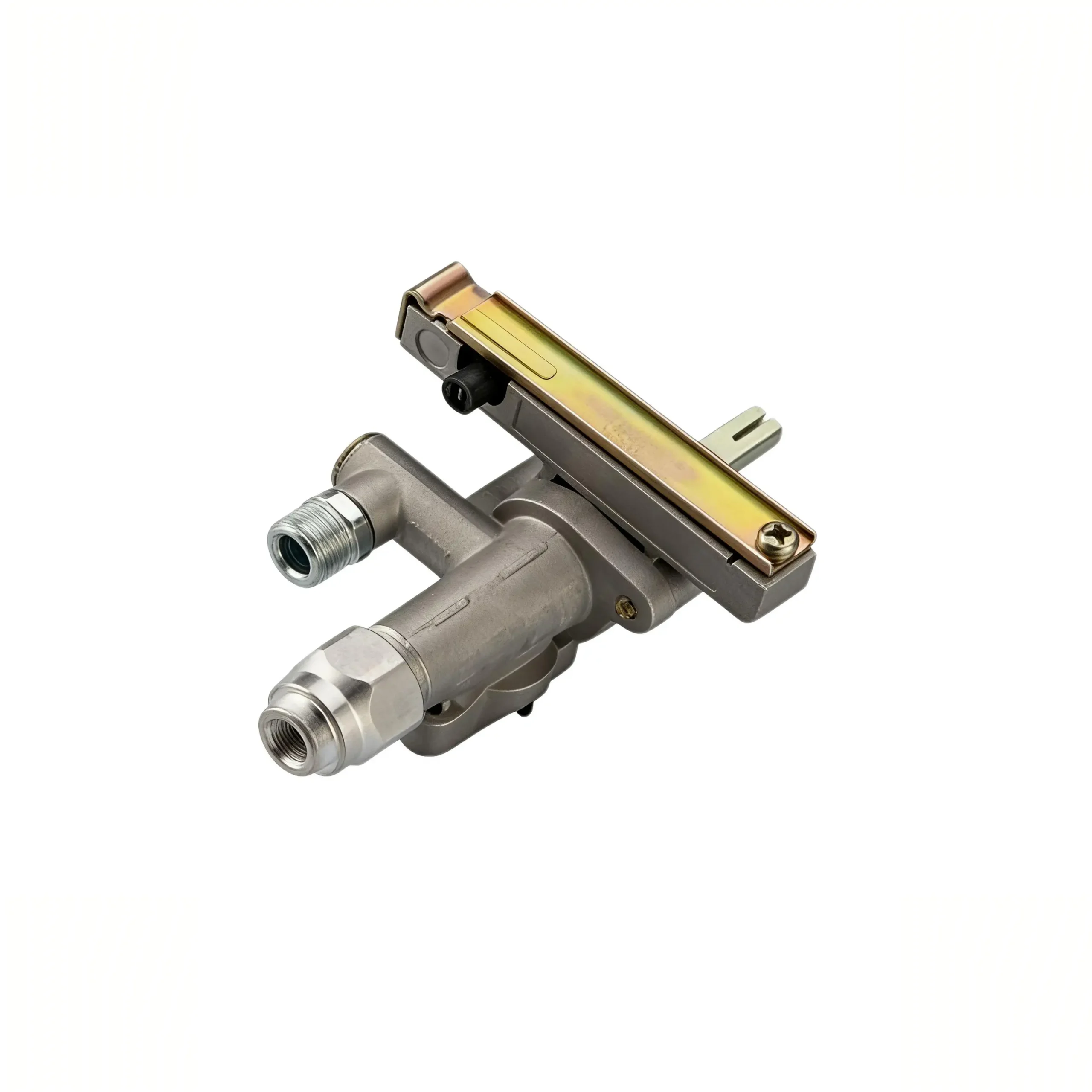


What Are Gas Stove Burner Parts?
Gas stove burner parts are the components responsible for mixing gas with air, igniting the fuel, and distributing heat evenly during cooking. Properly designed burner parts ensure stable flames, high thermal efficiency, and compliance with safety standards.
Typical gas stove burner parts include:
Burner head
Burner cap
Flame distributor
Injector (gas nozzle)
Venturi tube
Air mixing chamber
Each part plays a specific role, and even small design differences can significantly impact stove performance.
Materials Used in Gas Stove Burner Parts
Aluminum Gas Stove Burner Parts
Aluminum is one of the most commonly used materials for gas stove burner parts, especially in household gas stoves.
Advantages of aluminum burners:
Lightweight and cost-effective
Good heat conductivity
Suitable for large-scale OEM production
Typical applications:
LPG gas stoves
Built-in hobs
Mid-range residential cookers
Aluminum burner parts are usually produced by die casting, allowing consistent dimensions and efficient mass production.
Brass Gas Stove Burner Parts
Brass burner parts are widely used in higher-end gas stoves and export models where durability and corrosion resistance are critical.
Advantages of brass burners:
Excellent corrosion and oxidation resistance
Long service life
Stable combustion performance
Typical applications:
Natural gas stoves
Premium built-in gas hobs
CE-certified gas appliances
Brass gas stove burner parts are often manufactured using CNC machining for higher precision.
Structure of Gas Stove Burner Parts
Understanding the structure of gas stove burner parts helps manufacturers optimize combustion efficiency and safety.
1. Burner Head and Flame Ports
The burner head contains multiple flame ports that control flame size, shape, and distribution. The number, diameter, and arrangement of these ports directly influence flame stability and heat output.
2. Burner Cap and Flame Distribution
The burner cap helps distribute flames evenly across the cooking surface. Proper cap design prevents flame lifting, yellow flames, and uneven heating.
3. Injector and Gas Flow Control
The injector regulates gas flow into the burner system. Injector diameter must be precisely matched to the gas type (LPG or natural gas) to ensure proper air-gas mixing.
4. Venturi and Air Mixing System
The venturi tube draws in primary air and mixes it with gas before ignition. Efficient air mixing improves combustion efficiency and reduces carbon monoxide emissions.
Applications of Gas Stove Burner Parts
Gas Stove Burner Parts for LPG Stoves
LPG stoves operate under higher gas pressure, requiring burner parts with smaller injectors and stronger flame control.
Key requirements:
Precise injector sizing
Strong flame stability
Reliable ignition performance
LPG gas stove burner parts are widely used in household stoves and portable cooking appliances.
Gas Stove Burner Parts for Natural Gas Stoves
Natural gas stoves operate at lower pressure, requiring larger injectors and optimized air mixing structures.
Key requirements:
Larger gas flow channels
Softer, evenly distributed flames
Stable combustion at low pressure
These burner parts are common in urban residential kitchens and built-in gas hob systems.
OEM and Industrial Applications
For OEM stove manufacturers, gas stove burner parts must meet additional requirements:
Consistent dimensions across batches
Compatibility with different stove designs
Compliance with regional safety standards
Cost efficiency for mass production
Reliable burner part suppliers play a key role in ensuring production stability and quality control.
Common Quality Issues in Gas Stove Burner Parts
Manufacturers should pay attention to common quality problems, including:
Inconsistent flame hole dimensions
Material porosity in cast parts
Poor surface finishing
Improper injector calibration
These issues can result in unstable flames, reduced efficiency, and certification failures.
Safety Standards and Certification Considerations
Gas stove burner parts must comply with relevant safety standards depending on the target market, such as:
CE certification for the European market
EN standards for gas appliances
Internal performance and durability testing
Proper burner design and material selection significantly improve certification success rates.
Conclusion
Gas stove burner parts are a critical factor in gas stove performance, safety, and reliability. By understanding the materials, structural design, and application requirements of burner components, stove manufacturers can improve product quality and reduce long-term production risks.
Working with experienced OEM suppliers of gas stove burner parts ensures consistent quality, technical support, and stable supply for both LPG and natural gas stove projects.
 Looking for a Reliable Gas Stove Burner Parts Manufacturer?
 Looking for a Reliable Gas Stove Burner Parts Manufacturer?
We provide OEM gas stove burner parts with customizable materials, structures, and specifications for stove manufacturers worldwide.
Contact us to request technical details, samples, or quotations.
Email: jasonchenzs185@gmail.com
WhatsApp: +1 2132728460