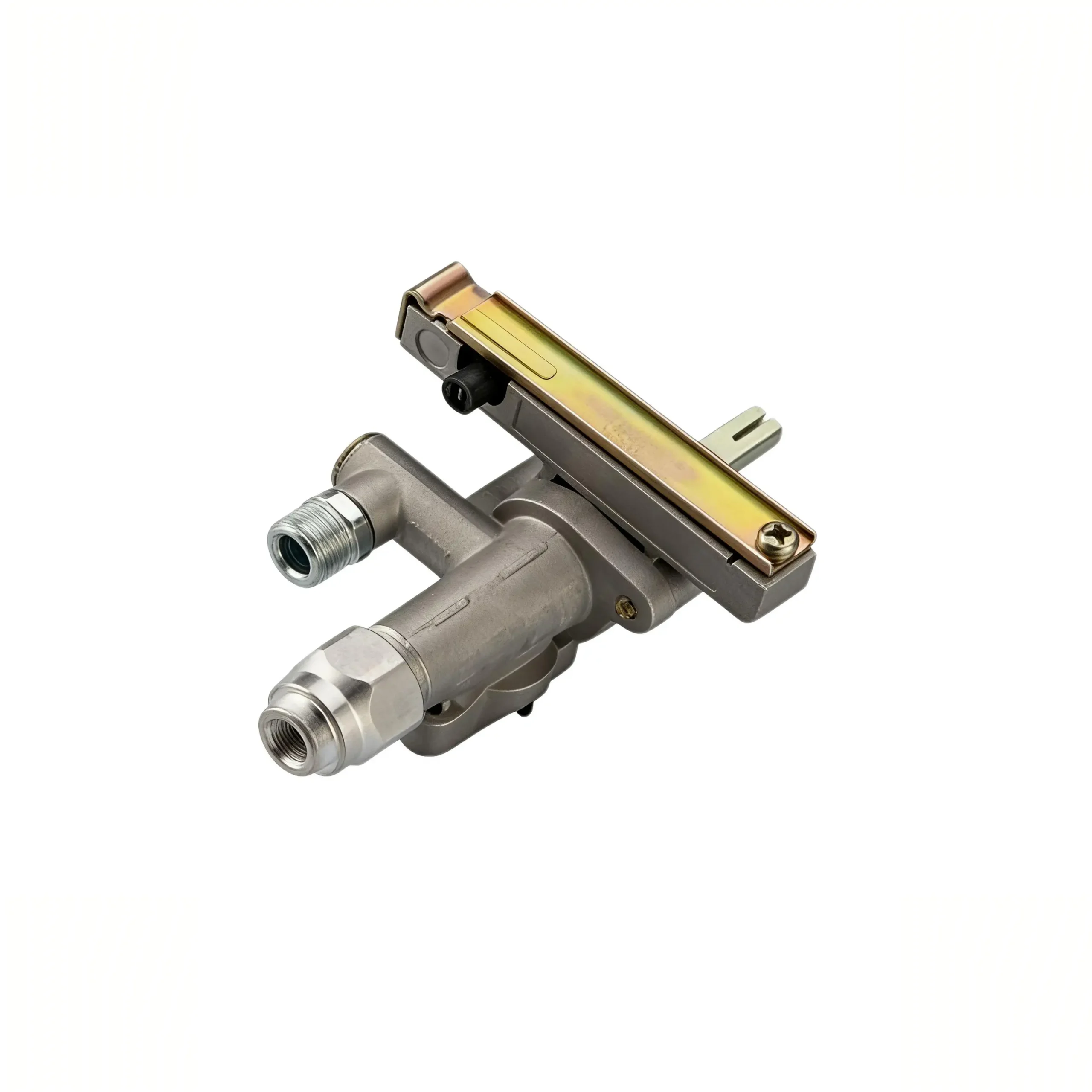
Gas Stove Burner Base for OEM Production: Cost-Effective Solutions for Stove Manufacturers
In OEM gas stove manufacturing, controlling cost without sacrificing safety and performance is a constant challenge. The gas stove burner base plays a key role in combustion stability, heat distribution, and assembly reliability, making it a critical component for both household and commercial cooktops.
This article explores how stove manufacturers can achieve cost-effective solutions in burner base sourcing and production while maintaining consistent quality.


1. Why the Burner Base Matters in OEM Cost Structure
The gas stove burner base directly influences:
Gas flow stability
Flame uniformity
Heat efficiency
Assembly accuracy
From a cost perspective, the burner base often represents a significant share of material, casting, and machining expenses. Poor design or unstable quality can lead to higher rejection rates and increased after-sales costs.
2. Material Selection for Cost Optimization
Cast Iron Burner Bases
High thermal stability and durability
Ideal for commercial gas stoves
Lower raw material cost but higher weight and logistics cost
Aluminum Alloy Burner Bases
Lightweight and easy to cast
Suitable for household gas cooktops
Lower machining cost when using die casting
Choosing the right material based on target market and application is the first step toward cost efficiency.
3. Casting Methods and Their Cost Impact
Sand Casting
Lower tooling cost
Suitable for small to medium production volumes
More post-machining required
Die Casting / Permanent Mold Casting
Higher initial tooling investment
Lower unit cost in large-scale OEM production
Better dimensional consistency
For long-term OEM cooperation, optimized casting methods significantly reduce per-unit cost.
4. Design Optimization for OEM Production
A cost-effective gas stove burner base design should focus on:
Simplified internal gas channels
Reduced unnecessary wall thickness
Standardized interfaces compatible with common burner heads and caps
Design-for-manufacturing (DFM) principles help manufacturers reduce machining time and material waste.
5. Machining and Tolerance Control
Excessive machining increases cost. Experienced suppliers:
Apply CNC machining only to critical sealing and assembly surfaces
Use near-net-shape casting to minimize material removal
Control tolerances based on functional requirements, not over-specification
Balanced tolerance design ensures performance without unnecessary expense.
6. Surface Treatment and Long-Term Value
Surface treatment affects both cost and durability. Common options include:
Anti-rust coating for cast iron burner bases
Powder coating or heat-resistant paint
Surface blasting to improve coating adhesion
Proper surface treatment reduces corrosion-related failures and warranty claims.
7. Quality Control That Saves Cost
Reliable OEM burner base suppliers implement:
Incoming raw material inspection
Gas leakage and airflow testing
Dimensional inspection for critical features
Preventing defects early is far more cost-effective than managing quality issues after assembly.
8. OEM Customization Without Cost Explosion
Cost-effective OEM solutions allow:
Custom gas inlet sizes
Compatibility with LPG and natural gas
Branding or model-specific adjustments
By using modular designs and standardized tooling, customization can be achieved without significantly increasing unit cost.
Conclusion
A well-designed and properly manufactured gas stove burner base is essential for cost-effective OEM gas stove production. Through smart material selection, optimized casting methods, controlled machining, and reliable quality management, stove manufacturers can achieve stable performance at competitive costs.
Partnering with an experienced burner base manufacturer enables OEM brands to reduce total production cost while maintaining safety, efficiency, and long-term reliability.