Gas Stove Burner Base Manufacturing Process: Materials, Casting, and Machining
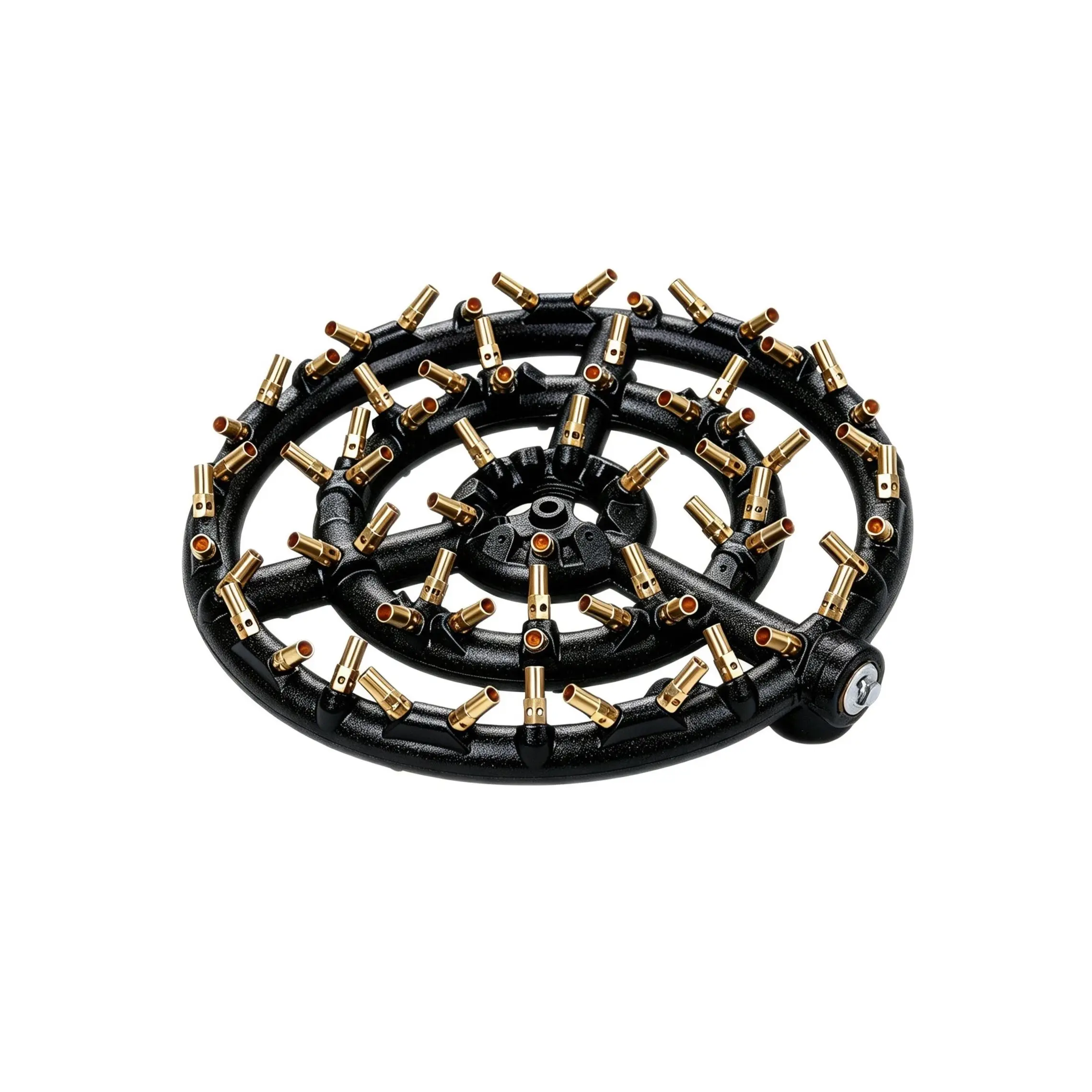
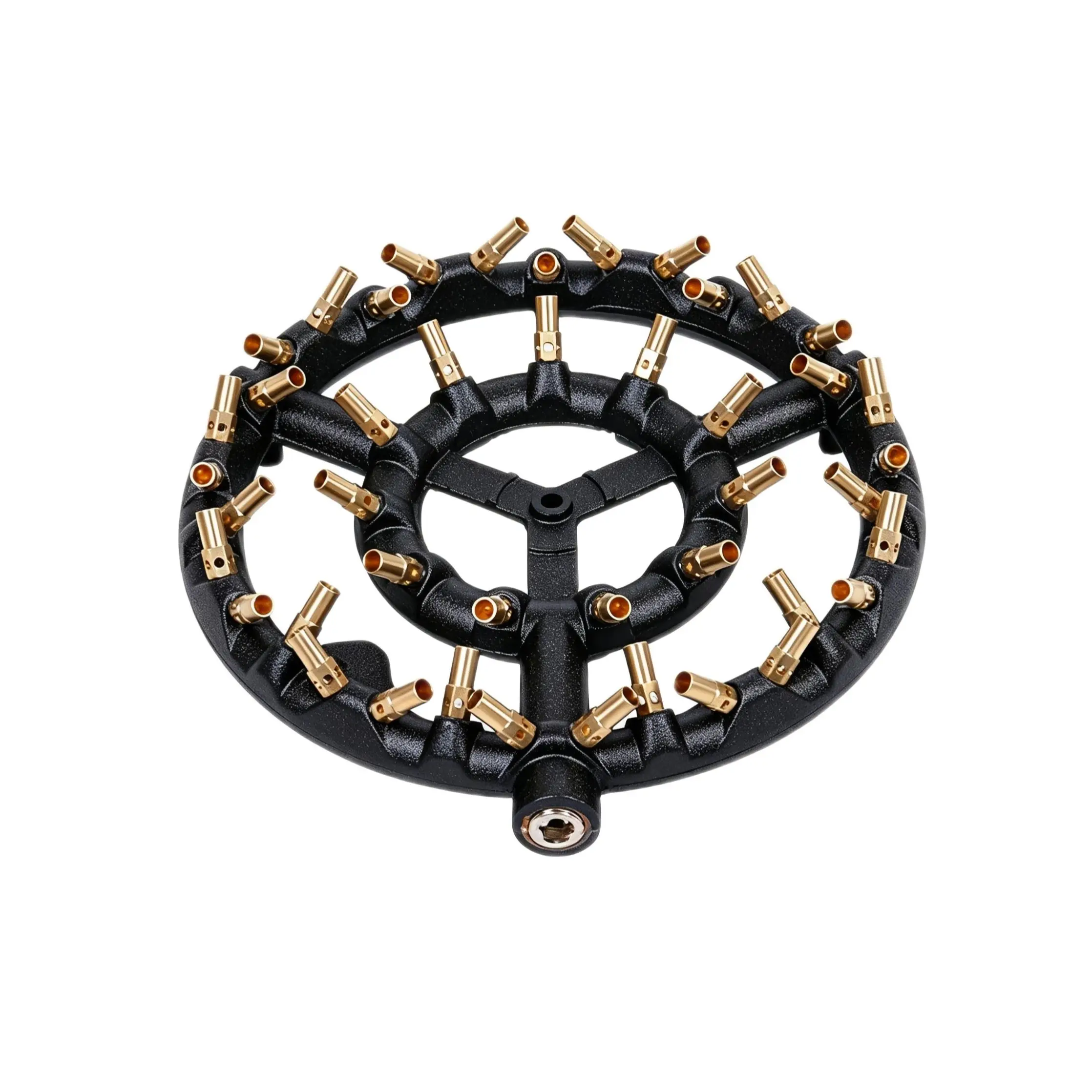
The gas stove burner base is a critical structural component that supports the burner head, controls gas distribution, and ensures stable combustion in gas cooktops. For stove manufacturers and OEM buyers, understanding the burner base manufacturing process is essential for achieving reliable performance, consistent quality, and cost-effective production.
This article explains how gas stove burner bases are manufactured—from material selection to casting and precision machining.

Learn more about gas stove burner cups.
1. Materials Used for Gas Stove Burner Bases
Material selection directly affects heat resistance, durability, and long-term safety.
Cast Iron Burner Bases
Cast iron is widely used for burner bases due to its:
Excellent thermal stability
High resistance to deformation
Long service life under continuous heating
Common grades include GG20 / HT200 gray cast iron, which offer balanced strength and machinability for large-scale OEM production.
Aluminum Alloy Burner Bases
Aluminum alloy burner bases are typically used in:
Lightweight household gas cooktops
Cost-sensitive market segments
Advantages include:
Lower material and transportation cost
High production efficiency through die casting
Good dimensional consistency
Proper alloy selection and surface treatment are required to ensure high-temperature durability.
2. Casting Process for Burner Bases
Cast Iron Casting
Cast iron burner bases are usually produced through:
Sand casting
Shell molding
Key process controls include:
Stable molten metal composition
Optimized gating and riser design
Controlled cooling to reduce internal stress
These factors help minimize porosity and dimensional variation.
Aluminum Die Casting
Aluminum burner bases are commonly manufactured using:
High-pressure die casting
This method allows:
Tight dimensional tolerances
High-volume, repeatable production
Reduced secondary machining
3. Machining and Precision Processing
After casting, critical surfaces of the gas stove burner base undergo machining to ensure proper fit and function.
CNC Machining
CNC machining is applied to:
Gas inlet interfaces
Mounting surfaces
Center alignment features
Precise machining ensures:
Accurate burner positioning
Stable gas flow
Easy assembly in OEM production lines
Drilling and Threading
Drilling operations create:
Gas channels
Mounting holes
Threaded connections
Automated machining improves consistency and reduces human error.
4. Surface Treatment and Finishing
Surface treatment improves corrosion resistance and appearance. Common options include:
Sandblasting or shot blasting
Heat-resistant coating
Anti-corrosion surface finishing
The choice of surface treatment depends on market requirements and operating conditions.
5. Quality Control in Burner Base Production
Effective quality control ensures consistent performance across production batches.
Key inspection steps include:
Incoming raw material inspection
Dimensional checks after machining
Flatness and alignment verification
Visual inspection for casting defects
Many OEM buyers also require compliance with ISO, CE, or EN standards.
6. Why Manufacturing Process Matters for OEM Buyers
A well-controlled gas stove burner base manufacturing process offers:
Stable flame performance
Reduced assembly issues
Lower defect and rejection rates
Improved product lifespan
Choosing a supplier with integrated casting and machining capabilities helps OEM manufacturers control both quality and cost.
Conclusion
The manufacturing process of a gas stove burner base involves careful material selection, controlled casting, and precision machining. Each step plays a critical role in ensuring reliable performance and long-term durability.
For stove manufacturers, understanding these processes supports better sourcing decisions and stronger OEM partnerships.