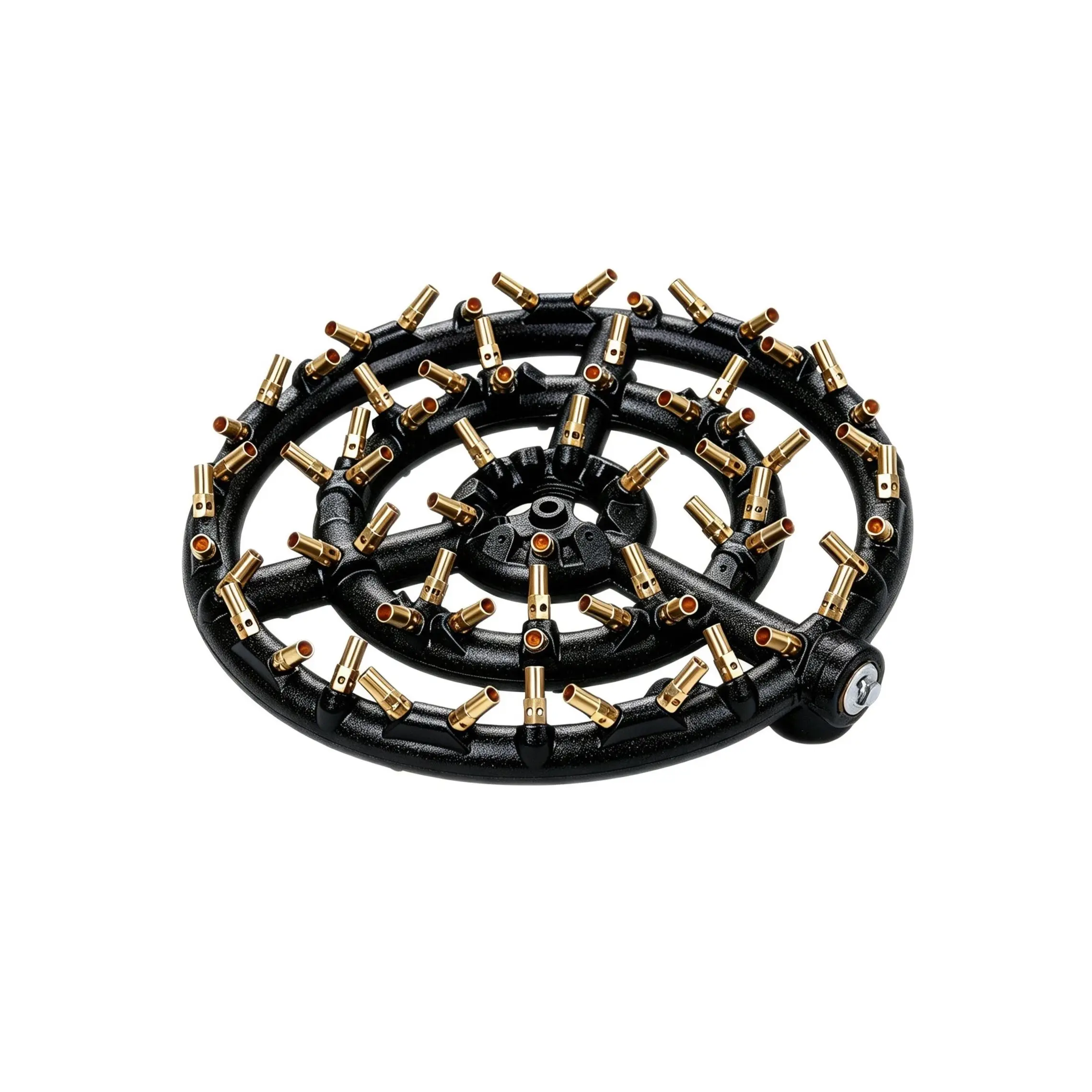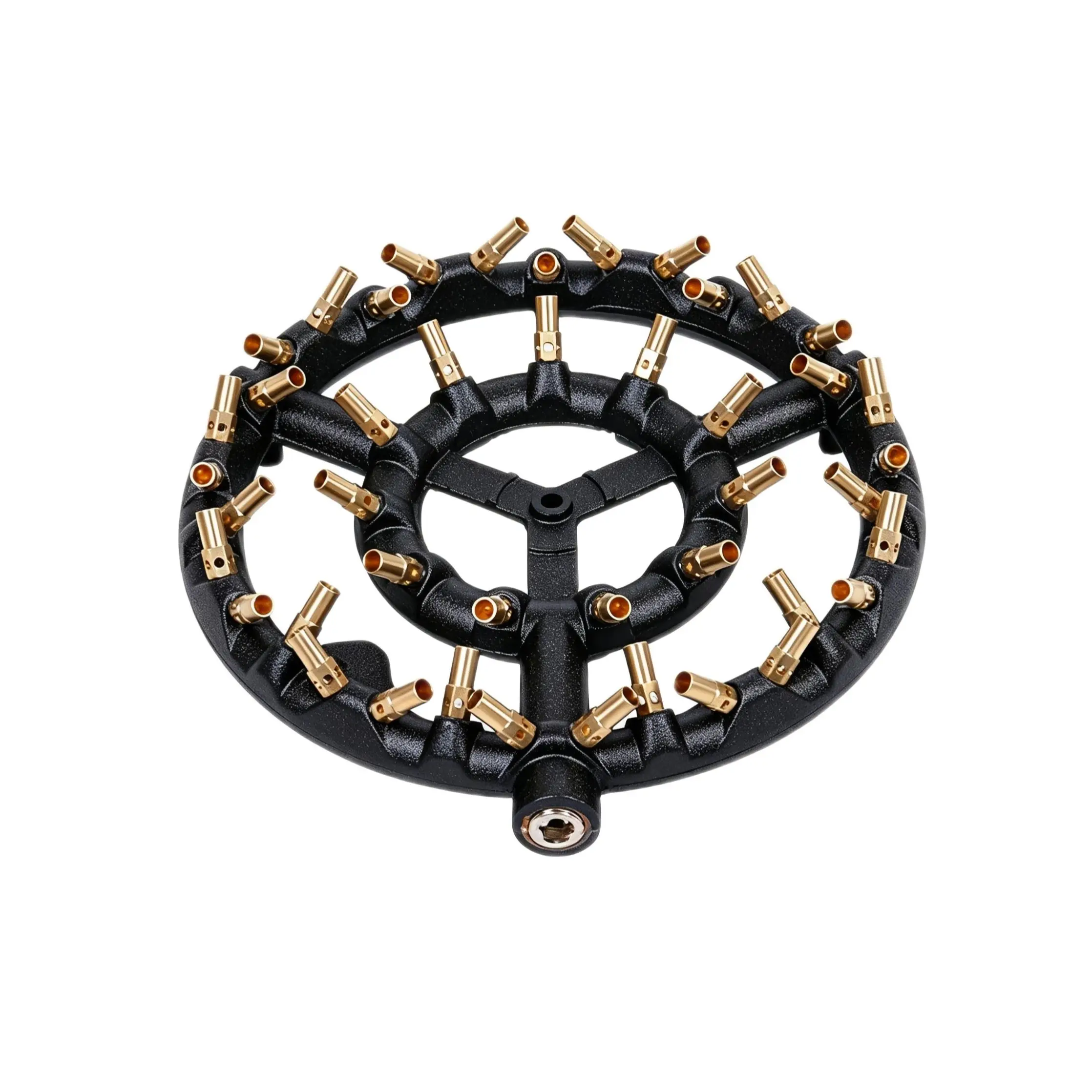
How Gas Stove Burner Parts Design Impacts CE Certification and Safety Standards
Introduction
For gas stove manufacturers targeting the European market, CE certification is not optional—it is mandatory. While many companies focus on the final appliance, the design of gas stove burner parts plays a decisive role in whether a product can pass CE certification and meet EU safety standards.
Burner heads, flame ports, venturi systems, ignition interfaces, and material selection all directly affect combustion safety, thermal stability, emissions, and user protection. Poorly designed burner components can result in failed tests, redesign costs, or even market rejection.
This article explains how gas stove burner parts design impacts CE certification, which standards are involved, and what manufacturers should consider when developing burners for the European Union.


Understanding CE Certification for Gas Appliances
CE marking for gas stoves is primarily based on the EU Gas Appliances Regulation (GAR) 2016/426, supported by harmonized standards such as:
EN 30 – Household cooking appliances burning gas
EN 203 – Professional gas cooking appliances
EN 437 – Test gases, test pressures, and appliance categories
CE certification evaluates not only the complete stove, but also how individual burner parts contribute to overall safety and performance.
1. Burner Design and Flame Stability
Why Flame Stability Matters
CE standards require that gas appliances operate safely under various conditions, including:
Pressure fluctuations
Different gas types (LPG / Natural Gas)
Airflow disturbances
Design Factors That Affect Compliance
Flame port geometry (size, spacing, and angle)
Uniform gas distribution inside the burner
Venturi design for correct gas–air mixing
A poorly designed burner can cause:
Flame lift-off
Flame flashback
Uneven combustion
Any of these issues can lead to automatic CE test failure, especially in flame stability and endurance tests.
2. Material Selection and Heat Resistance
CE Safety Requirements
Burner parts must withstand:
Continuous high temperatures
Thermal cycling
Oxidation and corrosion over time
Commonly Approved Materials
Cast iron with appropriate surface treatment
Heat-resistant steel alloys
Specialized burner coatings or enameling
Design Impact
If burner materials deform, crack, or oxidize excessively:
Flame shape changes
Combustion efficiency drops
Safety margins are compromised
CE testing includes long-duration operation tests, where material performance is closely observed.
3. Surface Treatment and Corrosion Protection
Why Surface Treatment Matters for CE
Surface treatment is not only about appearance. It affects:
Heat transfer
Flame consistency
Long-term safety
CE-Related Risks of Poor Surface Treatment
Coating peeling into flame ports
Blocked gas outlets
Increased carbon monoxide (CO) emissions
Approved surface treatments for burner parts typically include:
Heat-resistant coatings
Phosphate treatments
High-temperature enamel (for specific applications)
Inconsistent or low-quality surface finishing can directly cause emission and durability test failures.
4. Gas Tightness and Structural Integrity
CE standards strictly control gas leakage risks.
Burner Design Considerations
Precision of mating surfaces
Flatness and sealing interfaces
Structural rigidity under heat expansion
Even small dimensional inaccuracies in burner components can result in:
Micro gas leaks
Unsafe ignition behavior
Failure in gas tightness tests
This is especially critical for OEM burner parts used in professional or commercial gas stoves.
5. Compatibility with LPG and Natural Gas (EN 437)
Burner parts must be designed to function safely with different gas families:
G20 / G25 (Natural Gas)
G30 / G31 (LPG)
Design Elements That Affect Compatibility
Burner port sizing
Gas flow rate tolerance
Interchangeable injector compatibility
Incorrect burner design may:
Exceed allowable CO limits
Cause incomplete combustion
Fail gas conversion tests
CE certification requires clear documentation that burner parts support the declared gas category.
6. Ignition Safety and Flame Supervision
Although ignition systems are separate components, burner design directly affects ignition reliability.
Key factors include:
Flame travel path
Burner crown shape
Ignition point positioning
Poor burner design can result in:
Delayed ignition
Explosion risk during startup
Flame detection instability
These issues are heavily scrutinized during CE safety evaluations.
7. Documentation and Traceability Requirements
CE compliance is not only physical—it is also documentary.
Burner parts design must be supported by:
Technical drawings
Material specifications
Process consistency records
OEM suppliers who can provide stable burner designs with traceable specifications significantly reduce the CE certification burden for stove manufacturers.
Conclusion
Gas stove burner parts are not simple components—they are safety-critical elements that directly impact CE certification and compliance with EU safety standards.
From flame stability and material selection to surface treatment and dimensional accuracy, every design decision affects:
Certification success rate
Product reliability
Long-term market access in Europe
For stove manufacturers and OEM buyers, working with burner part suppliers who understand CE-oriented design principles is essential to avoid costly redesigns and certification delays.
Why OEM Manufacturers Choose CE-Oriented Burner Part Suppliers
Experienced burner part manufacturers help OEM customers by:
Designing burners aligned with EN standards
Supporting LPG and Natural Gas applications
Providing consistent quality for mass production
Reducing CE testing risks and costs
Choosing the right burner parts supplier is not only a purchasing decision—it is a certification strategy.